
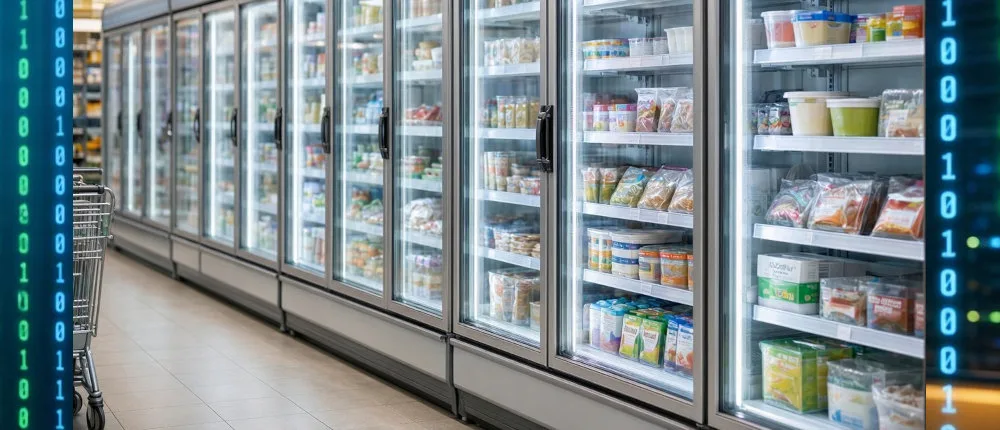
On 2nd November 2026, food companies across Europe reported that they had fallen victim to cyber-attacks targeting their refrigeration software. The companies included supermarket chains and food processors in seven countries. Ireland, Belgium and the Netherlands were among those affected.
Hackers focused on internet-connected refrigeration software and, where successful, they forced freezers and fridges into a continuous ‘defrost’ mode, resulting in large quantities of spoiled and unsafe food. The attack followed a similar incident in October, which affected French supermarkets. It cost the businesses millions of Euros and produced countless tonnes of food waste.
The cyber-intrusions happened at a time when the UK Government has been urging Britons to build up supplies of food and other essentials. Ministers warned that the UK needs to improve its broader resilience in the face of global warming, increasingly severe weather conditions, and hostile actions by foreign states.
Evidence of Vulnerability
The recent attacks have served to show that developed nations are highly dependent on refrigeration systems. They have also highlighted the extent of businesses’ vulnerability when they rely on them. Today, refrigeration is not only costly in terms of energy, carbon footprint and staff time; it must also be regarded as an area of operational risk.
Ambient Means Less Risk
Products that achieve long shelf-lives at ambient temperatures expose retailers and wholesalers to far less risk, as well as to lower costs. Simply Doughnuts has long been a champion of stocking longer-lasting ambient products, which offer several crucial strengths:
- No need for refrigeration, either in-store or in transit
- Appreciable savings on energy and carbon
- No need for staff to spend time on defrosting, preparation and handling
- No need for separate storage; products can be placed straight onto the shelf
- No risk of spoiling in the event that refrigeration fails
Stocking a larger proportion of ambient products therefore offers both cost-saving and risk-mitigating benefits, while simultaneously bolstering operational resilience. And importantly, these benefits come in addition to the obvious waste-saving advantages of long-life products that afford retailers plenty of time to sell.
For details of our individual products’ shelf-lives, please see our Doughnuts product range page.